
Are New Construction Homes Cheaper? DFW Buyer Factors
See how to compare new and existing home costs in DFW, from land and included features to repairs, financing, and the scope behind a builder’s price.

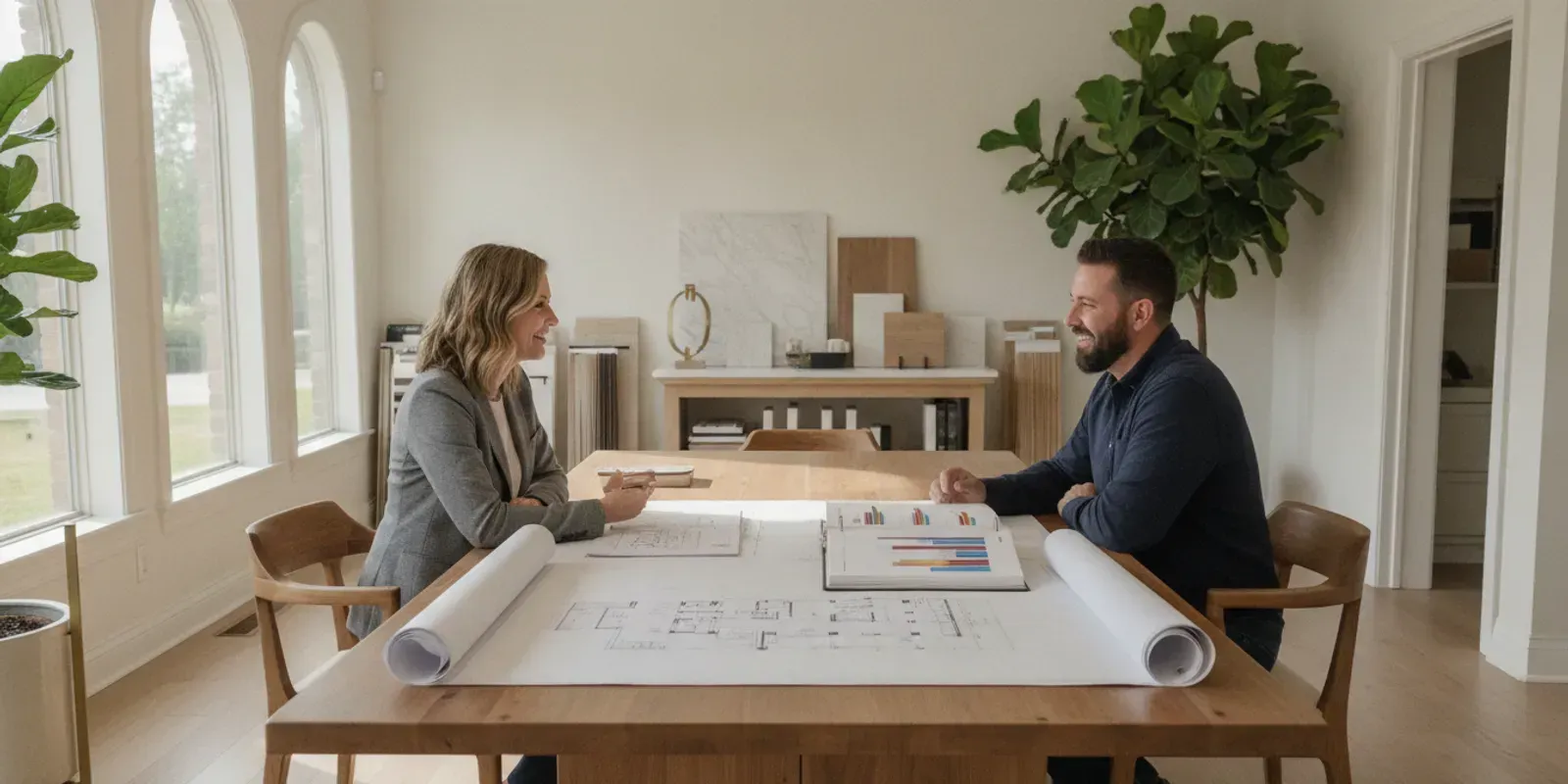
Are new construction homes cheaper? The answer depends on which costs you compare and what each home includes. A new home may have a higher headline price than an older home nearby, while including a different layout, finish level, and amount of near-term work. An existing home may look less expensive until you account for needed repairs or changes. DFW buyers can make a more useful comparison by defining the scope on both sides, rather than treating the listing price as the whole cost.
Discuss your custom-home plans
What does "cheaper" mean in a home comparison?
"Cheaper" can mean a lower purchase price, less cash needed before moving in, a lower monthly payment, fewer early repairs, or a lower cost over a period of ownership. These measures do not always point to the same home. A buyer may choose a more expensive property because it already has the location and layout they want. Another buyer may prefer a lower initial price and take on improvements over time.
Before comparing, choose the question you are trying to answer. For example, are you comparing the money needed to get into the home, the cost to bring it to your preferred condition, or recurring housing expenses? Write the question at the top of your notes. That simple step helps keep a construction quote, a resale listing, and a lender's payment estimate from being mistaken for equivalent figures.
Separate the comparison into several parts:
- Acquisition: the purchase price, or the construction price plus the cost of land if you need to buy a lot.
- Completion: selected features, work, or purchases needed to make the property ready for your household.
- Ownership: property taxes, insurance, utilities, maintenance, and any applicable community costs.
- Financing: lender charges and interest based on your specific loan and timing.
- Fit: how well the location, layout, size, and features meet your needs, including changes you would otherwise make.
Do not combine these into a claim that one type of home is always less expensive. Keep confirmed amounts, estimates, and unknowns visibly separate. That gives you a comparison you can update as you receive an inspection report, written scope, or lender figures.
Why can a new home cost more or less than an existing home?
There is no single price rule for every DFW location or property. Land, neighborhood, size, layout, condition, finish level, and the amount of customization all affect what you are comparing. Two homes that appear similar in photos can deliver different things, and two prices can be based on different measurements or scopes.
Location and land are part of the value
A new home in a developing area and a resale in an established neighborhood may not be direct alternatives. They can differ in commute, nearby services, lot size, surrounding homes, or community arrangements. Compare locations your household would genuinely consider. Note what you gain and what you give up rather than treating every DFW address as interchangeable.
If you already own land, it still has value in a fair comparison. You may not be writing a check to purchase it now, but the lot is an asset you are choosing to use for the build. If you need to buy land, include its price and verify what the transaction covers. In either case, do not assume that a lot is ready for construction without confirming relevant site, access, and utility details.
For buyers weighing a build on land they own, the build-on-your-lot overview is a useful starting point for a builder conversation. Your specific property and project still need their own written scope and evaluation.
Square footage and usable space are not identical
Square footage is a useful starting point, but it does not describe how well a plan works for a household. A layout with useful storage and rooms that fit daily routines can function differently from another home with the same reported area. A buyer considering a resale should check how the listing defines its area. A buyer considering a build should ask what measurement the builder uses and which spaces it counts.
ROSÖ Homes uses Total Area Under Roof (TAUR) for its approved construction rate. The current stated rate is $175 per square foot of TAUR, with a 2,000-square-foot minimum; design services are included. TAUR should not be treated as interchangeable with a listing's interior living-area measurement. Confirm the plans, included spaces, and construction scope before comparing price per square foot.
For a basic arithmetic illustration, 2,000 square feet multiplied by $175 per square foot equals $350,000 at that stated rate. This illustrates the rate calculation only; it is not a full project quote or a claim that land, site work, or every owner-selected expense is included. Ask what the written scope covers and what remains outside it.
Condition and included features change the real comparison
An existing home may include mature landscaping, window coverings, appliances, or other features that a new-home buyer would need to arrange. It may also have components that need repair or replacement. A new home may avoid some immediate replacement projects, but "new" does not mean that every item a buyer wants is part of the price or that a home needs no ongoing care.
For a resale, arrange an appropriate inspection and make a list of work you would actually do. For a new home, request a written list of included features, allowances, exclusions, and owner responsibilities. Model homes and photographs may show choices that are not part of a proposed base scope. ROSÖ Homes' options information can help you identify topics to clarify, but the agreement for your project is the controlling source for its terms.
How can you compare a new build and an existing home fairly?
Use the same process for both options. The goal is not to predict every future expense perfectly. It is to make assumptions visible, identify the questions that matter, and compare homes that could realistically meet the same household's needs.
1. Select genuinely comparable options
Choose an existing home and a new-build path that fit your needs on location, size, bedroom count, lot expectations, and desired finish level as closely as practical. If they differ, record the difference. If an existing home has a location or feature you cannot reproduce in a new build, say so plainly; it may be more important to your decision than the price difference.
Write down the features that are must-haves and the ones that are preferences. A buyer who needs a particular floor plan should compare the cost of obtaining that layout, not simply compare two headline prices. If you compare a minimally finished construction scope with a fully renovated resale, the result may mainly reflect the finish difference rather than the underlying choice between new and existing.
2. List acquisition and completion costs separately
For a resale, record the contract price, then list likely repairs and improvements on separate lines. For a build, identify the construction price, land purchase cost if relevant, and any work or purchases outside the written construction agreement. Ask about allowances, selections, utility work, site assumptions, and owner responsibilities before treating a preliminary number as a complete total.
Label every amount as confirmed, estimated, or unknown, and write down its source. A signed agreement is not the same as an early estimate. An inspector's finding is different from a buyer's guess. Do not enter zero for an item you have not investigated; mark it unknown and identify who can answer it.
3. Price only the resale work you expect to do
Use inspection findings and, for substantial work, written estimates from qualified providers. Separate urgent repairs from improvements you simply prefer. If you can live with dated cabinets for several years, you may not need to count a full kitchen project as a move-in cost. If the layout will not work without changes, include those changes and the disruption they may involve.
Be consistent about timing. One option may need work before move-in, while another may allow you to make choices gradually. Record when you expect to pay for the work as well as the estimate. A future project does not disappear from the comparison, but it should not be presented as if it were an immediate cash requirement.
4. Ask what is inside and outside a build scope
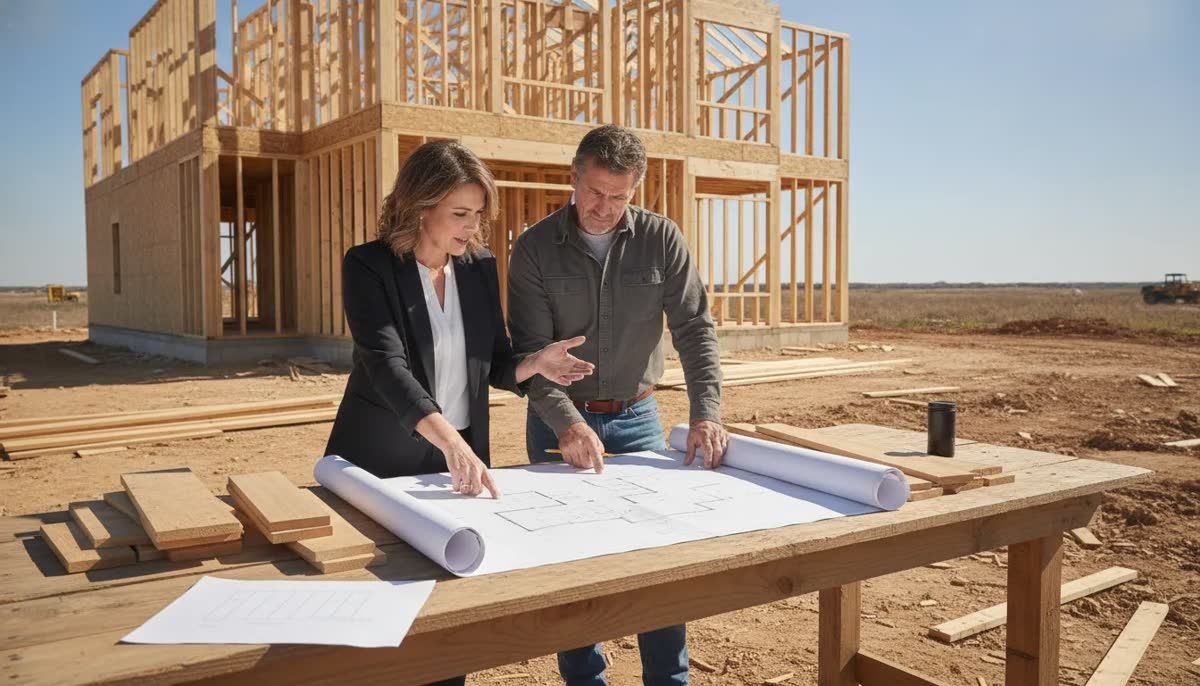
Request written answers about the pricing area, included design services, materials, finish levels, selected features, and exclusions. Ask how changes are documented and approved, and when a change could affect the price. Clarify site assumptions and which utility, landscaping, fencing, appliance, or completion items the owner must arrange. The point is not to assume these items are excluded; it is to learn what the actual agreement says.
ROSÖ Homes states that its custom construction rate is $175 per square foot of TAUR, with a 2,000-square-foot minimum and design services included. The company also states a fixed price before groundbreaking, a 120-day construction timeline from groundbreaking, and a guaranteed 10% below other DFW custom builders. Treat those as the company's stated guarantees and ask how the written agreement defines the project scope, comparison, price, and timeline. A construction timeline beginning at groundbreaking is not the same as a promise about every step before construction begins.
A price described as fixed can clarify the builder's agreed scope. It does not by itself establish the cost of land, financing, or items outside that scope. Review the written terms and keep those categories distinct. You can learn more about the company's stated custom build process and bring project-specific questions to the discussion.
5. Compare recurring costs property by property
Taxes, insurance, utilities, and maintenance depend on the property and your circumstances. Do not assume that a new home automatically has lower taxes or that an older home always costs more to maintain. Ask relevant providers or local authorities for property-specific information where available, and mark estimates as estimates. Confirm whether any community costs or rules apply to either option.
Size and features matter, too. A larger home, pool, extensive landscaping, or specialized systems may have different operating and upkeep needs regardless of age. Ask what routine care a home requires, what information is available about its systems, and whether warranties or service documents apply. For a new home, read the actual warranty terms rather than relying on a general description.
6. Have the lender compare financing
A resale purchase and a construction project may use different loan structures and timing. The buyer's lender, not the builder, explains qualification, cash requirements, draws, interest, rate locks, fees, and any transition to permanent financing. ROSÖ Homes is the builder, not the lender; it does not originate loans or set loan terms, rates, or interest calculations.
Ask your lender to compare the financing path for each property using your circumstances and consistent assumptions where possible. Note what period a payment estimate covers and which charges it includes. The Consumer Financial Protection Bureau provides consumer financial information at its official website; use it as a general resource alongside direct advice from your lender about your specific loan. If a financing detail is unclear, ask the lender to explain it rather than substituting a generic calculator for a loan-specific answer.
How do customization and resale renovations compare?
Customization can be valuable when it gives you a layout or feature you would otherwise pay to change. It can also add choices and expense. Before comparing, list the design requirements that matter most: room arrangements, storage, accessibility needs, work-from-home space, or other household priorities. Then distinguish needs from upgrades you might add only if the budget and scope allow.
With an existing home, customization usually happens after purchase. Some work is straightforward; other changes may involve design, permits, contractors, temporary disruption, or uncertainty about existing conditions. Obtain estimates and learn what assumptions they make. With a new home, ask how selections are priced, when decisions are due, and how a revision is documented. Do not assume that a requested change has no effect on price or schedule; rely on the written process.
Think through a simple comparison: if you would make the same major layout changes to a resale that a custom plan can incorporate from the start, compare realistic estimates for those changes with the proposed build scope. If the resale already works and needs only cosmetic updates you can postpone, do not charge the build comparison for a renovation you are unlikely to undertake. The useful figure is the work you genuinely expect, not the most elaborate possible version of either home.
To get concrete about finish expectations, look at examples of kitchen features and completed ROSÖ Homes projects. Photos can help you frame questions about materials and layout, but ask which exact items would be included in your proposed written scope.
What should a comparison worksheet include?
A useful worksheet can be a simple pair of lists, one for the existing home and one for the build. Use the same labels for both and leave unknowns visible. Include the source and confidence level for each figure.
- Purchase price or stated construction price.
- Lot purchase cost or current value of land already owned.
- Area measurement used and which spaces it includes.
- Included features, finish level, allowances, and exclusions.
- Repairs or desired improvements before move-in.
- Site work, utilities, landscaping, appliances, and other owner responsibilities.
- Property-specific estimates for taxes, insurance, utilities, and upkeep.
- Financing costs and timing confirmed by the lender.
- Expected schedule, temporary housing, and moving considerations.
- Open questions, the person responsible for answering them, and the date to follow up.
Then calculate two views. First, estimate the money needed to acquire and prepare each home for your intended move-in condition. Second, compare recurring costs over a time period that makes sense to your household. Keep financing separate until your lender provides figures that match the relevant loan path. Do not insert assumed appreciation or resale value as if it were guaranteed. If you choose to model a future scenario, label it as an assumption, not a known cost or outcome.
For example, your worksheet might show that a resale's asking price is confirmed, its roof condition needs further evaluation, and a planned kitchen update is optional. The build side might show a written construction price, but leave land preparation and a few owner-selected items unconfirmed. The comparison is not ready to become a single reliable total until the unknowns are addressed. That is useful information: it shows what to ask next, instead of creating false precision.
Which questions should you ask before choosing?
Direct questions help reveal differences in scope without assuming that one path is universally less expensive. Ask each person about the part they can verify.
Questions about an existing home
- Which repairs or replacements have been completed, and is documentation available?
- What fixtures, appliances, and other items are included in the sale?
- Are there conditions that should be reviewed by an inspector or specialist?
- What property-specific taxes, insurance, or community obligations should I verify?
- Which changes are essential for my household, and which can wait?
Questions about a custom build
- What exactly does the written construction price include?
- Is the quoted area TAUR, living area, or another measurement, and what does it include?
- Which choices can change the price, and how are changes approved in writing?
- Which site, utility, or completion items are excluded or still unknown?
- What does the stated schedule measure, when does it begin, and what dependencies remain?
- Can I use the builder's design services or bring my own architect, and how would that affect project coordination?
ROSÖ Homes states that buyers may use its in-house design services or their own architect. Ask how that choice applies to your plans and written scope. More examples of the company's work are available in its home photo gallery; treat those as visual references, not a substitute for project-specific specifications.
Questions for your lender
- Which loan structures could apply to each option?
- How much cash may be needed, and at what points?
- How do draws, interest, rate locks, fees, and any conversion to permanent financing work for my loan?
- Which assumptions should I use to compare monthly payments or total financing costs?
Share the builder's written scope with your lender if it helps evaluate the project. The lender determines loan approval and terms. Builder pricing and financing figures answer different questions, so keep the documents separate and make sure each cost appears only once in your comparison.
How should timing and uncertainty affect the decision?
Timing can affect a household's practical costs even when it is not part of the home price. You may need to coordinate a lease, sale, school schedule, relocation, or temporary housing. Compare realistic schedules, but first confirm what each timeline measures. A resale closing date, a construction period, and the full time from deciding to build until move-in are different milestones.
For an existing home, planned repairs may extend the time before it meets your needs. For a custom build, construction is one part of the broader process. Land readiness, design, approvals, financing, selections, and other project-specific steps may come before groundbreaking. Ask the builder what starts the stated timeline, which milestones it covers, and what conditions affect it. The stated ROSÖ Homes 120-day construction timeline begins at groundbreaking; do not treat it as a complete estimate of every pre-construction step.
Uncertainty also deserves a place in your notes. A known cost can be easier to plan for than an unresolved possibility, even if the known cost is significant. Ask what can be confirmed now, what remains an estimate or allowance, and which decision or evaluation would reduce uncertainty. You do not need to eliminate every unknown before deciding, but you should understand which open questions could materially change your choice.
When might a new home offer better value?
A new home may fit a buyer who wants a particular layout, has or plans to acquire a suitable lot, and values selecting features through a defined project. A clear written scope can help that buyer understand the builder's portion of the cost. Someone who would otherwise undertake substantial remodeling may find it useful to compare the build proposal with realistic renovation estimates for an existing home that is actually available and suitable.
That does not prove a new home is cheaper in every case. Land, site conditions, choices, financing, and items outside the construction agreement still matter. A buyer should compare a complete, written plan with a real alternative, including the location and condition of the resale property, not an imagined home that may not be available.
When might an existing home offer better value?
An existing home can be a strong choice when its location, layout, condition, and included features already fit your needs. It may offer mature landscaping or an established setting that a new home cannot provide immediately. If it needs only work you are comfortable postponing, a lower initial outlay may better match your priorities.
A lower listing price is not the whole calculation if repairs or changes are essential. Review the home's condition, confirm what stays with the property, and price the work you expect to complete. Then weigh the remaining differences: perhaps the resale has a location you prefer, while the build offers a layout you cannot find in the existing market. Value depends on the trade-offs your household actually cares about.
What mistakes make the comparison misleading?
- Comparing different area measurements: Confirm whether a number uses living area, TAUR, or another basis before comparing price per square foot.
- Ignoring land: An owned lot still has value, and purchasing land adds a cost to a build.
- Assuming every pictured feature is included: Verify models, photographs, allowances, and written scope.
- Counting every possible renovation: Separate necessary work from improvements you may never choose.
- Assuming a new home needs no maintenance: New construction still needs care, and warranty terms are specific.
- Mixing a builder's price with a lender's estimate: They answer different questions and should be shown in distinct parts of the worksheet.
- Treating timelines as equivalent: Check start dates, milestones, and exclusions.
- Using unverified tax, insurance, or utility figures: Seek property-specific information and label estimates honestly.
- Counting an estimate as a confirmed amount: Record who supplied each figure and what conditions could change it.
For a broader overview of evaluating new homes in this area, continue with the DFW new-build guide. Use that next-step reading alongside the property documents, written scope, inspection information, and lender guidance relevant to your situation.
Frequently asked questions
Are new construction homes cheaper than existing homes?
Not in every comparison. The result depends on location, land, size, included features, condition, site work, and financing. Compare homes that meet similar needs and include the repairs or completion work you actually expect.
Is a new home cheaper to maintain?
It may have fewer immediate replacement needs than a property with older components, but no home is maintenance-free. Costs depend on the specific home, systems, size, landscaping, and care. Review available inspection, warranty, and maintenance information rather than relying only on the home's age.
Should I compare price per square foot?
It can help with an initial screen only when the area definitions and included scope are comparable. Confirm whether each figure is based on living area, TAUR, or another measurement, then check which features and work are included.
Does a fixed construction price include land and financing?
Do not assume that it does. Ask the builder what the construction agreement includes and excludes, and ask your lender about financing charges and terms. Show land, site items, and loan costs separately unless the relevant written documents explicitly include them.
What should I do first if I am considering a custom home?
List your must-have features, lot situation, budget boundaries, and timing. Then ask for a written explanation of the builder's scope and discuss the financing path with a lender. Review ROSÖ Homes' company information and project examples as part of your research, while confirming all terms for your own project in writing.
Learn more about planning a custom home
The most dependable answer comes from matching needs and scope, documenting costs, and checking financing with your lender. Once you know what each home includes and what remains your responsibility, you can decide which option offers the right value for your household.