
Contingency Budget Custom Home Texas: Clear Explanation
Learn how to plan a custom-home contingency budget in Texas by separating contract scope, lot questions, owner choices, and lender requirements.

How large should a contingency budget custom home Texas buyers set aside? There is no single percentage that fits every lot, design, agreement, or financing arrangement. A useful reserve starts with the uncertainties that remain after the project has been investigated and the written scope has been reviewed. That matters especially when you own the land: your budget should separate costs already defined from questions that still need answers.
Discuss your custom-home plans
What does a contingency budget mean for a custom home?
A contingency budget is money kept available for a defined uncertainty or an expense that is not settled yet. It is a planning reserve, not a second construction price, a promise that a problem will occur, or permission to spend without approval. Its purpose is to help you respond to an eligible unexpected cost without immediately reshaping the rest of your finances.
The word “contingency” can describe several different things, so begin by separating the pots of money and the rules attached to each:
- Owner reserve: Funds the homeowner can access for costs outside the signed construction agreement or for a change the homeowner chooses.
- Contractor contingency: A reserve or allowance included in a particular agreement for risks defined by that contract. The agreement determines who controls it, what qualifies, and how unused funds are handled.
- Construction-loan reserve: Funds or documentation a lender requires under its own underwriting and loan documents. The lender, not the builder, sets those conditions.
These are not interchangeable. Money a lender asks you to document may not be available for the builder to use. A personal reserve may not satisfy a loan condition. And a contractor allowance does not automatically cover every item beyond the construction scope. Ask the lender and builder to explain their respective rules in writing. ROSÖ Homes is the builder, not the lender, and does not set loan terms, rates, draw rules, or interest calculations.
How should you calculate the amount?
Begin with a project-specific list rather than a universal percentage. A percentage can serve as a rough placeholder during early conversations, but it cannot show whether the land needs further investigation, whether a cost is already included, or how much accessible cash the lender expects. The base also matters: a percentage of the construction agreement is not the same amount as a percentage of the full project budget, which may include land, site preparation, utilities, design choices, permits, and financing expenses.
Use these steps to turn a broad guess into a working estimate:
- Record the current written price. Use a current estimate or signed agreement, not a remembered conversation or old web figure. Note the date and the exact scope the price represents.
- Make an inclusions-and-exclusions list. Review the agreement, plans, specifications, selections, and site information. Record which costs are included, excluded, allowances, and unresolved items. If the answer is not in writing, label it “confirm” rather than treating it as settled.
- Assign an owner to each open question. Identify whether the builder, homeowner, lender, utility provider, local authority, or a specialist must resolve it. A named next step is more useful than a general “miscellaneous” line.
- Ask for a price or a way to narrow the uncertainty. Request a written estimate or range from the responsible provider where possible. If nobody can price an item yet, note what information is missing and when it may become available.
- Separate planned choices from unexpected conditions. A desired upgrade is a choice, even if its final price is unknown. Keep it visible in the budget, but do not disguise it as an unforeseen event.
- Check what funds are actually accessible. Ask your lender when money must be documented and whether the reserve can be used for the purpose you have in mind. Consider discussing personal liquidity with a qualified financial adviser.
- Update the estimate at decision points. Revisit it as site information arrives, plans and specifications are completed, selections are priced, and the agreement is prepared. Retire an old estimate when its assumptions no longer match the project.
The aim is not to add the full value of every project cost a second time. If a known item is fixed and clearly included in the agreement, counting the same full amount as a contingency can overstate the funds needed. But a reserve does not turn an unpriced, excluded item into a contract inclusion. The written scope and reserve serve different purposes.
Which costs should you check before setting a reserve?
For a Texas custom home, the following categories are a starting checklist. They are not a claim that each item will apply to every lot or home. Actual requirements depend on the property, jurisdiction, design, utility providers, agreement, and lender. Use the list to discover what needs an answer, not to assume a new charge exists.
Cost or open question What to verify Practical next step Land and site information What surveys, soil information, drainage details, access conditions, or prior reports are available and current? Ask which information is adequate and whether a qualified specialist should review the property. Site work and utilities Whether grading, clearing, driveway work, service connections, or utility requirements are included or still pending. Request scope details and contact the applicable utility or local authority where needed. Plans and selections Whether materials, fixtures, appliances, and revisions match the price basis and written specifications. Keep a dated selections list and request written pricing for open decisions. Permits and local requirements Who handles applications, fees, inspections, and required changes in the relevant jurisdiction? Confirm responsibility and current requirements with the builder and jurisdiction. Financing and carrying costs What fees, interest assumptions, draw procedures, documentation, and reserves does the lender specify? Ask the lender for an itemized estimate and clarification of its assumptions. Owner-requested changes Whether a preferred upgrade or revision is in the original scope. Get the price and any schedule effect in writing before authorizing it.
After reviewing the table, mark each row “included,” “excluded,” “allowance,” or “needs confirmation.” Then attach a source to every estimate: the contract, a provider quote, a lender document, or a dated conversation awaiting written confirmation. This small discipline prevents an early planning note from being mistaken for a firm commitment.
For example, if a utility provider has not yet confirmed a connection requirement, the line should say “provider confirmation pending” and name who will request it. It should not say “covered by contingency” and end there. Once the provider gives a scope and price, decide whether it belongs in the project cost, the reserve, or another budget line. The label should describe the expense; it does not determine who is responsible for paying it.
Why do lot conditions affect the reserve?
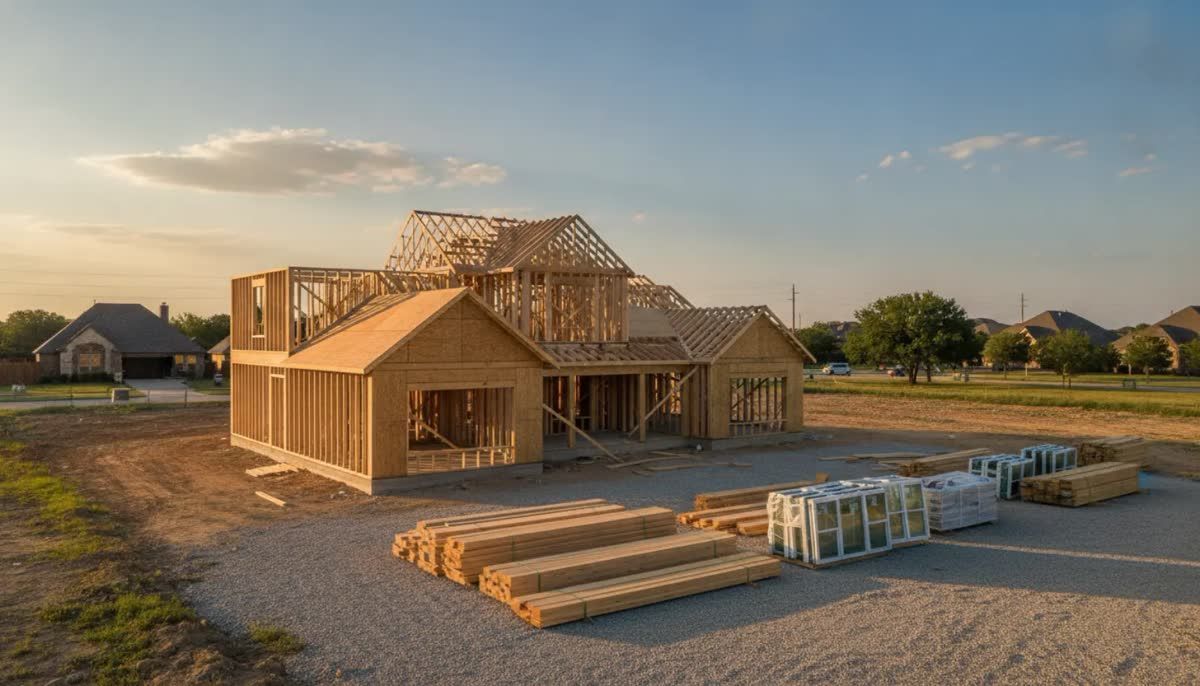
Two homes with similar plans can have different site needs. Access, topography, utility availability, drainage, and other property conditions may affect the work required. Square footage alone cannot identify those differences. Before deciding on a reserve, gather what is already known about the lot and identify what remains uncertain.
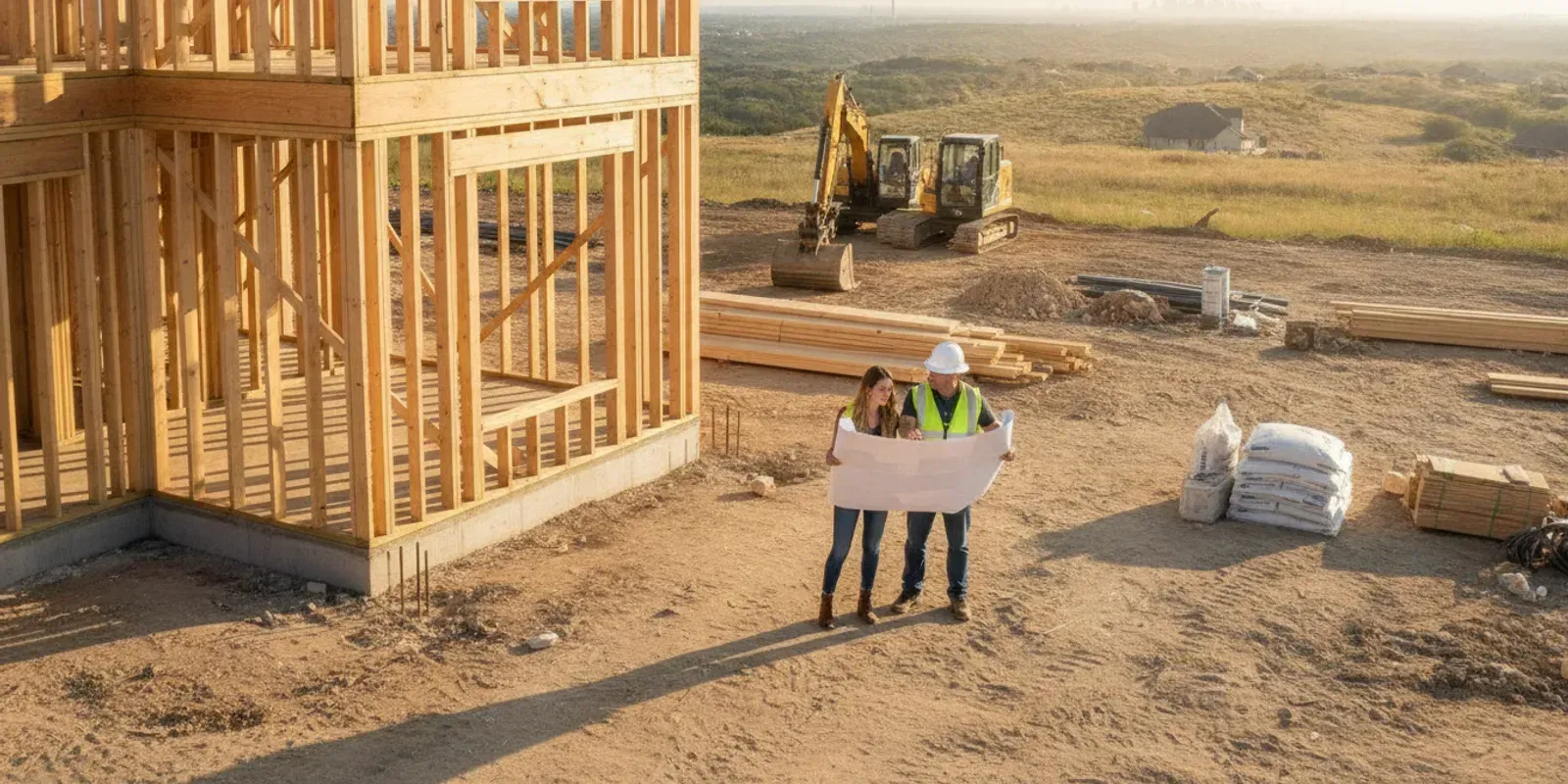
If you own the property, assemble the documents you have, such as a survey, utility information, restrictions, or prior site reports. Do not assume that information from a previous owner is current or answers every construction question. Ask the builder which documents are useful, what additional review may be appropriate, and which site decisions need to be resolved before the construction scope can be finalized. Technical questions should go to the appropriate qualified professional; a budget allowance is not a substitute for investigation.
ROSÖ Homes builds on a homeowner’s lot as well as in its communities. Its build-on-your-lot information can help explain that path, while each property still needs project-specific review. If you are weighing an owned lot against a community option, make two lists: known site facts and unresolved questions. Comparing those lists may help you see which budget assumptions need verification before you choose.
How should you handle an unknown site condition?
First, describe the uncertainty in concrete terms. “Possible extra site cost” is hard to evaluate. “Need to confirm whether the planned utility connection is available at the property boundary” points to a question, a responsible party, and a possible source of information. Then identify what decision depends on the answer and when the answer is needed.
Next, distinguish an unknown condition from a known scope item. If the plan already calls for a specific driveway or clearing work, ask whether that work is included and how it is priced. If the property has an unresolved condition that could change the required work, ask what investigation can reduce the uncertainty. Keep both the cost question and the investigation step visible; a reserve estimate alone does not settle either one.
Finally, decide how to treat the item in your budget until it is resolved. You might track it as an open estimate, an excluded cost awaiting a quote, or a lender question. Do not give it a precise dollar figure merely to make the spreadsheet look complete. An honest “not yet known” paired with a next action is more useful than false precision.
How do fixed pricing and a reserve work together?
A fixed construction price can establish the agreed price for a defined scope before groundbreaking. It does not automatically include every cost of owning or financing a home, every item excluded from the agreement, or every owner-requested change. Read the actual scope: what is included, what is excluded, how changes are priced and approved, and what events the contract says can affect the agreed amount.
ROSÖ Homes’ current approved construction rate is $175 per square foot of Total Area Under Roof (TAUR), with a 2,000-square-foot minimum; design services are included. That rate is a stated construction-price basis, not an all-in estimate for every lot and buyer. As a simple illustration, 2,500 square feet of TAUR multiplied by $175 equals $437,500 for the stated construction-price calculation. That example is not a quote for a particular home and does not establish the costs of land, site work, financing, or any other item outside the defined scope. Confirm the current written terms and scope directly before relying on a planning figure.
In a contract conversation, ask whether the price is fixed for the plans and specifications being discussed, how a homeowner-requested change is priced and approved, how an allowance is reconciled with a final selection, and how an unexpected condition is handled. Those answers help you identify what belongs in the contract, what remains an owner cost, and what uncertainty the reserve is intended to address. The reserve should not conceal ambiguity about what you are buying.
Selections can be a source of confusion if a buyer assumes a preferred finish is included without checking the specification. ROSÖ Homes’ available options and kitchen information can help you prepare questions about design choices. Treat those pages as a starting point for discussion, not a replacement for the current written specification for your project.
How can you build a practical reserve worksheet?
A useful worksheet does not need a complicated model. Its job is to keep confirmed costs, open estimates, owner decisions, and lender rules from blending together. Use a separate row for each question rather than combining many possibilities under one broad label.
For each line, record the item; whether it is included, excluded, an allowance, or unresolved; the estimate or range if one exists; the source and date; who is responsible for obtaining the answer; the next action; and the date to revisit it. Add a short note explaining what could change the estimate. When the question is resolved, update the status and keep the prior information for reference.
Keep at least three totals visible:
- Agreed construction amount: The amount associated with the defined construction scope in the current written documents.
- Known costs outside that scope: Items with an identified responsibility and an estimate or written price.
- Owner’s remaining reserve: Funds still available for the uncertainties or choices the owner has decided to cover.
Track lender-required funds separately, even if the same household resources are being considered. Ask the lender whether those funds must remain available, be documented, or follow particular use rules. This prevents you from counting the same dollars twice, or assuming that a builder’s contingency and your personal reserve satisfy a lender’s separate requirement.
Here is a simple, hypothetical example. Suppose a buyer has a written construction scope, a pending utility answer, an undecided fixture selection, and a lender request to document available funds. The worksheet should not combine all four into one “contingency” number. The construction scope is its own figure; the utility question needs a provider response; the fixture is an owner choice awaiting selection pricing; and the lender request needs an answer from the loan officer. Only after those lines are clarified can the buyer judge which risks remain and what funds are available to address them.
This approach also makes change decisions clearer during construction. Before approving a requested upgrade, enter its price and any schedule effect, identify whether it replaces an existing selection or adds to scope, and ask how payment is handled under the contract and loan. Once approved, show it as a committed change rather than leaving it hidden in the reserve. The remaining reserve should reflect what is still uncertain, not what has already been decided.
What should you ask your construction lender?
Ask the lender, not the builder, what reserve or contingency the loan requires. Loan programs differ, and the lender sets its approval, appraisal, draw process, cash requirements, interest treatment, and conditions through its own program and documents. A builder can provide contract or project information but cannot promise loan approval or interpret your loan terms.
Ask the loan officer to explain:
- Whether a required reserve is calculated from the construction amount or another base.
- Whether funds must be held in a particular account, documented, or available at a specific time.
- Which costs or approved changes may be paid from loan proceeds and which require separate funds.
- How draw approvals work and what documents must be provided for a draw.
- Whether a change in scope, price, or schedule requires lender review.
- How interest, fees, and unused reserve funds are treated under the loan.
Write down the answers and keep the lender’s estimate with your budget file. If the builder supplies contract or draw information, share it with the lender and ask the lender to explain how it applies to your financing. ROSÖ Homes’ financing information may be a useful starting point, but loan-specific questions belong with your lender.
Be careful when searching for the word “contingency” in legal or public construction material. For example, Washington’s statutory definition of “budget contingencies” concerns a public body and certain construction-contract arrangements; it is not a recommended homeowner reserve amount or a Texas loan rule. The limited definition is available in Washington RCW 39.10.210. Your agreement and lender documents are the relevant sources for your own project.
How can you compare two budget plans?
When comparing a conservative plan with a leaner one, do not compare only the final totals. Compare the assumptions beneath them. One plan may include a priced utility scope while another lists the same work as unresolved. One may include a chosen upgrade in the construction amount while another treats it as a future owner change. A larger total does not automatically mean a safer or more accurate budget if its categories overlap.
Review each plan line by line. Check that both use the same construction scope, the same definition of TAUR where applicable, the same known site information, and the same treatment of allowances and exclusions. Then ask which questions have been answered by a written document and which amounts are placeholders. If one plan leaves a category blank, determine whether it is truly not applicable or simply has not been investigated yet.
For example, imagine Plan A has a smaller stated reserve but includes a written estimate for a known outside cost. Plan B has a larger reserve but leaves that same cost undefined. You cannot tell which plan requires more accessible money until you understand whether Plan B’s reserve is meant to cover that item and whether the estimate is included elsewhere. Put the assumptions on one page, resolve duplicate entries, and ask the lender to review any financing implications.
Use the same comparison when considering an owned lot and a community home. ROSÖ Homes’ Munson Ranch community information offers context about one community option; it does not substitute for property-specific pricing or a current agreement. If you are reviewing completed projects, the past homes gallery may help you identify design questions, but it does not tell you what is included in a future home’s written scope.
What questions should you settle before signing or starting?
Use these questions to turn a rough budget conversation into specific actions:
- What exactly is included in the current construction price, and what is excluded?
- Which selections or allowances remain open, and how will their final prices be determined?
- What information about the lot is still missing, who will obtain it, and by when?
- Are there utility, access, site-work, or local-requirement questions that need written confirmation?
- How does the agreement handle a requested change, including written approval and any schedule effect?
- How does the agreement address an unforeseen condition, and who decides whether it changes scope or price?
- Does the lender require a specific reserve, when must it be documented, and how may it be used?
- Which known costs are outside the builder’s scope and outside the lender’s proceeds?
- When will the budget be reviewed again, and who will provide updated figures?
Save the answers with the estimate, plans, and contract materials. If an answer changes, update the worksheet and note the date. If a verbal explanation affects the price, scope, or responsibility, request the corresponding written clarification before you rely on it.
Frequently asked questions
Is a custom-home contingency the same as a cost-overrun allowance?
Not necessarily. “Contingency” can mean an owner’s personal reserve, a contract provision, or a lender requirement. A cost-overrun allowance may have a specific meaning in an agreement. Ask who controls the funds, which costs qualify, whether approval is needed, and how unused funds are handled.
Should I set the reserve as a percentage of the construction price?
A percentage can be a rough early placeholder, but it cannot establish a project-specific reserve by itself. First identify the percentage base, the included scope, excluded costs, remaining site questions, owner choices, and lender requirements. A percentage of construction price alone can miss costs outside the agreement or duplicate items already included.
Does a fixed-price agreement mean I do not need a reserve?
A fixed price can clarify the agreed amount for its defined scope. It does not automatically settle excluded costs, owner-selected changes, or separate lender requirements. Review the agreement and ask the lender which funds you should keep available. Do not assume the reserve changes the contract or includes items listed as excluded.
Can my builder tell me how much my construction lender requires?
The builder can provide project and contract information, but the lender sets its own loan conditions. Ask the loan officer for the amount, timing, documentation, and rules for using funds. Have the lender explain whether a proposed contract change affects the loan.
Plan from the written scope, not a guess
The right contingency budget is tied to your project’s remaining uncertainties, written scope, and lender instructions. Identify open questions early, ask the responsible professional to resolve them, and update the figures as the lot, plans, selections, and agreement become more specific. For a conversation about building a custom home on your lot, contact ROSÖ Homes with your questions and available site information.
Talk with ROSÖ Homes about your plans
A written budget cannot eliminate every unknown, but it can show what each number covers and help you make the next decision with greater clarity.