
Custom Home Builder Consultation Pricing DFW: Questions to Ask
Learn what to ask about custom home consultation fees, scope, plans, and budget in DFW before comparing builders or requesting a construction quote.

Searching for custom home builder consultation pricing in DFW? Before booking a meeting, clarify whether there is a consultation fee, what the conversation includes, and what information the builder needs to discuss your budget responsibly. A consultation is a chance to understand the process and decide on next steps; it is not automatically a complete estimate or a construction contract.
What does consultation pricing cover?
The phrase “consultation pricing” can mean several different things. One builder may use it to describe an initial discussion. Another may mean a paid planning meeting, a preliminary estimate, a design engagement, or a formal proposal. Those are not interchangeable. Ask the builder to name the service, explain its limits, and put any fee or included work in writing before you schedule or authorize paid services.
Start with a direct question: “Is there a charge for the first conversation, and if so, what do I receive for that fee?” Follow up by asking whether the fee covers an in-person meeting, a review of your lot or plans, a written budget range, revisions, or a later design step. If there is no fee for an introductory meeting, ask where that introductory discussion ends and any paid work begins. Do not assume that a meeting includes plans, engineering, site investigation, or a fixed construction price unless the builder says so.
Get clarity on the output. A conversation may help identify a suitable project path, but it may not be based on verified site conditions, selected materials, final plans, or a defined scope. Ask whether the next deliverable is a rough discussion, a written estimate, a design agreement, or a construction proposal. Ask who prepares it, how long it remains valid, and what decisions or documents are needed before it can be made more precise.
These questions are useful whether the builder charges for an initial consultation or not. The aim is not to focus on a single meeting price in isolation. It is to understand what work is being offered, what it does not include, and what you will need to pay for as the project moves forward.
How should you ask about the builder’s fee?
Ask for the amount, when it is due, and the terms that apply. A clear answer should distinguish a one-time meeting charge from a design retainer, plan fee, or other project cost. If an amount can be credited toward later services, ask what event triggers the credit, whether it applies automatically, and whether there are conditions or an expiration date. If it cannot be credited, ask what deliverable you receive for it.
Ask whether follow-up questions, additional meetings, or revisions create another charge. Find out whether travel, a lot visit, plan review, or coordination with an architect is included or priced separately. Do not rely on an informal description such as “we’ll figure it out later.” Request the fee and scope in a document you can review before work starts.
If a builder does not charge for an introductory conversation, that does not necessarily mean every later step is included. Find out which design or preconstruction services have a separate agreement and when you would be asked to sign it. Conversely, a paid consultation is not necessarily a construction commitment. Ask what obligations, if any, begin when you pay.
Keep the discussion practical and neutral. You might say: “I’m comparing the steps, not just the meeting fee. Please tell me what this charge covers, what it excludes, and what I would have to approve before additional work begins.” A straightforward question gives both sides a useful point of reference.
What should you clarify about the meeting’s scope?
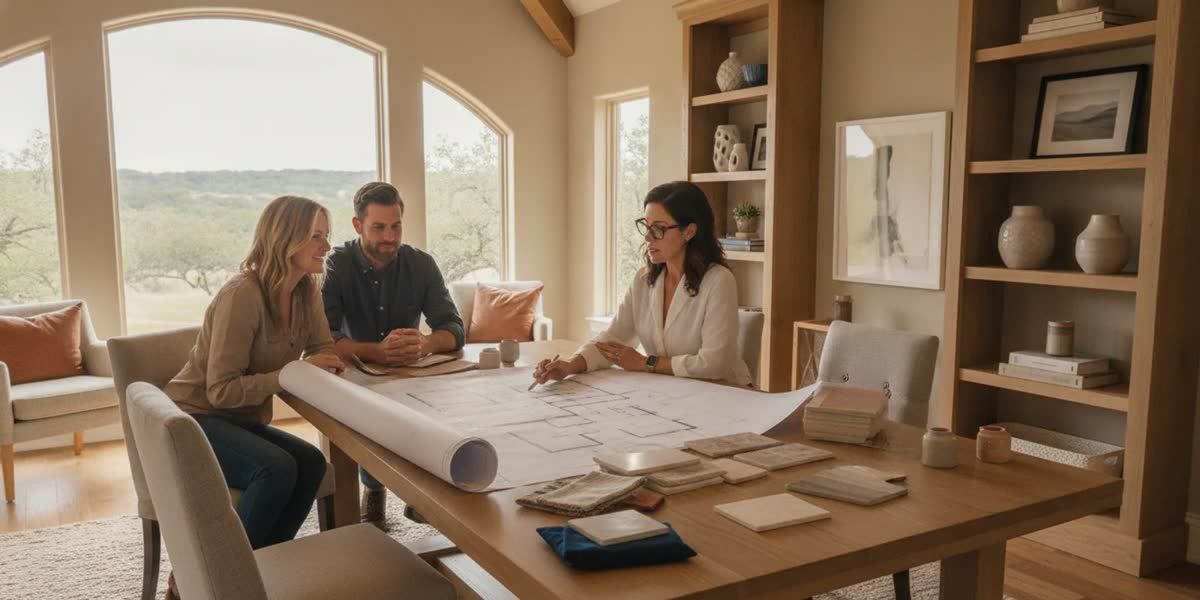
Before the meeting, ask what topics the builder can reasonably address with the information you have. A first conversation might cover your goals, a broad construction approach, the builder’s process, and what is needed to develop a project-specific figure. It may not settle every selection, site condition, construction detail, or schedule. Ask what the builder will review in advance and what you should bring.
Clarify whether the conversation includes:
- A discussion of your intended home size, layout, style, and must-have features.
- An initial review of your lot, location, access, utilities, or known restrictions, and whether any site review is only preliminary.
- A conversation about plans, architectural services, and who is responsible for producing or revising drawings.
- An explanation of the builder’s pricing basis and how scope changes affect the price.
- A list of next steps and the documents needed for a more detailed estimate or proposal.
Then ask what is expressly outside the meeting. A discussion is not necessarily a code review, survey, soil report, engineering assessment, permit determination, or final evaluation of your land. Do not treat a verbal impression as confirmation that a lot is ready to build on. Ask which specialists or records may be needed and who will arrange or pay for that work.
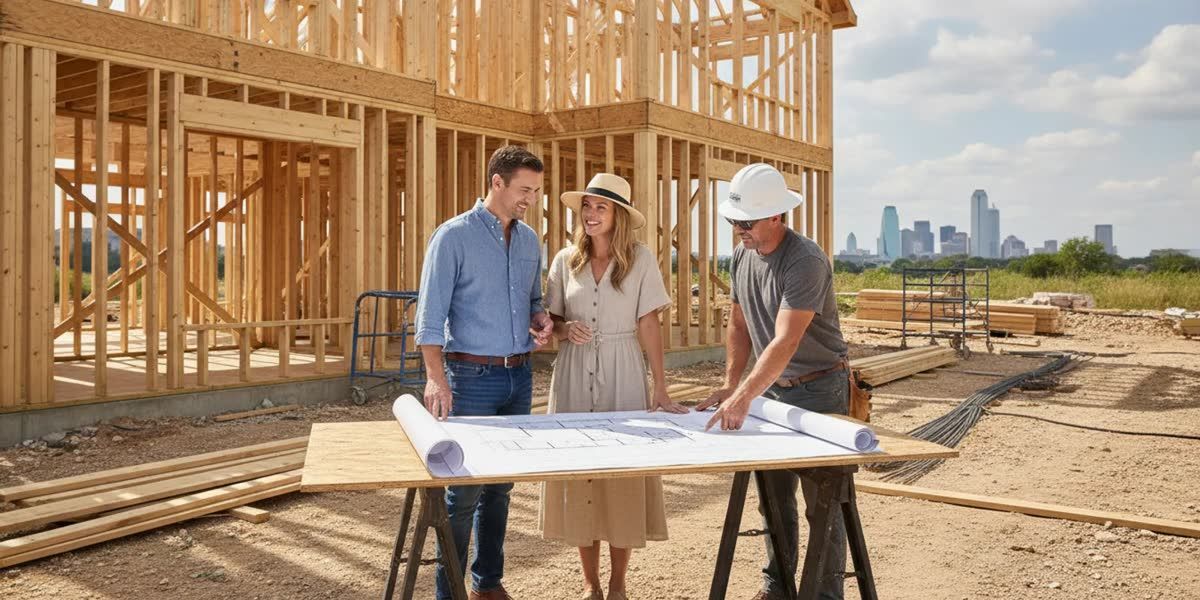
For buyers building on land they already own, the build-on-your-lot process is an important subject to raise. Explain what you know about the property and ask how the builder evaluates a lot before finalizing a project price. If you are still exploring land or a community, say so; the conversation may need to account for that open decision rather than assume a specific site.
What information helps make a budget conversation useful?
You do not need every choice finalized before an introductory conversation. You do need to be candid about what is known, what is flexible, and what is still a question. A builder cannot responsibly respond to a budget target without understanding what you want included and what assumptions remain unresolved.
Prepare a short project brief. Include the city or general area, whether you own the lot, your approximate target size, the number of bedrooms and other essential spaces, and the features you consider non-negotiable. Separate must-haves from preferences. For example, say that a particular accessibility feature or home office is essential, while a specific countertop or decorative detail is still open to discussion.
State your budget range and define what you mean by “budget.” Are you asking about construction only, or are you thinking about the full amount available for land, construction, design, site work, furnishings, and other costs? The builder may not set or know every cost associated with your purchase. Ask which parts of your target relate to the builder’s work and which require separate confirmation.
Bring any existing material that can help explain the project:
- A lot address or parcel information, if you have it, plus any survey or documents already available.
- Sketches, inspiration images, or an existing plan, with a note about what you like or want to change.
- A rough square-footage target and a list of spaces that affect the design.
- A short list of desired finishes, systems, and special features, marked as essential or optional.
- A realistic decision timeline, including any land purchase, move, or financing milestones you already know.
If you do not have those materials, say so. Ask what is actually necessary to start and what can wait. A useful early discussion should identify missing information without pressuring you to make premature selections.
How do you separate design fees from construction pricing?
Ask whether design work is included in the builder’s stated construction pricing, sold as a separate service, or handled under a different agreement. The word “included” needs a scope. Ask what design services it refers to, what drawings or revisions are provided, and when the design is considered sufficiently complete for construction pricing. Do not assume that every consultant, report, or design change is covered because a builder includes some design services.
ROSÖ Homes’ current approved construction rate is $175 per square foot of Total Area Under Roof (TAUR), with a 2,000-square-foot minimum, and design services are included. Ask how TAUR is measured for your specific plan and what the written scope says the rate includes. If you prefer to work with your own architect, raise that at the start and ask how the architect’s plans would be coordinated with the builder’s process.
For simple arithmetic, 2,000 square feet multiplied by $175 is $350,000. That multiplication is not a project-specific quote or a statement that every possible project cost is included. The area definition, plan, site, selections, written scope, and any separately handled costs matter. Ask the builder to explain how a figure is developed for your home and to document the basis in the proposal. You can review custom-home cost details for additional DFW pricing context.
Also ask what happens if the plan changes after pricing is discussed. Who approves a change, how is its cost calculated, and when will you receive the updated amount? Get an answer about how allowances, selections, or open decisions appear in the written documents. If a cost is not yet known, ask that it be clearly identified as an unresolved item rather than mistaken for a confirmed fixed amount.
ROSÖ Homes describes its pricing as fixed before groundbreaking. Ask what must be resolved and documented before the construction price is fixed, and how a change requested afterward is handled. A fixed-price conversation is most useful when you understand both what is fixed and the process for changes.
What should you ask about a price comparison?
A low meeting fee does not necessarily mean a low project cost, and two builders may not be quoting the same work. Compare the service and scope behind each number. Ask whether the figure is an early budget range or a written construction price, what plan and area it assumes, which selections are specified, and which items remain undecided.
Use the same questions with each builder:
- What exact work and deliverables does this fee or price cover?
- What assumptions were used for size, plans, site conditions, and finish level?
- Which costs are excluded, provisional, or dependent on further information?
- What is the process and cost basis for a change to plans or selections?
- When does the number expire, and what could make it change before a contract?
- What written agreement applies to this step, and what does signing it authorize?
Make a side-by-side list rather than ranking the numbers alone. If one builder has reviewed your plan and another has only heard a verbal description, label the estimates accordingly. If a builder gives a single number without saying what it covers, ask for assumptions and exclusions before relying on it. A transparent estimate helps you identify unanswered questions; it does not eliminate the need to read the agreement.
You can also ask how the builder describes its value proposition and whether any savings statement is a stated guarantee with defined terms. ROSÖ Homes positions its fixed pricing as guaranteed at least 10% below other DFW custom builders. Ask what comparison basis and written terms apply to that guarantee, rather than trying to infer its application from an introductory meeting. Keep the comparison focused on equivalent scope and documented terms.
Which project details should you bring up early?
Some decisions can materially shape a plan or a pricing conversation, so mention them even if you do not yet know the final answer. These include the lot location and conditions, approximate total area under roof, number of stories, garage needs, unusual structural or accessibility requirements, and any significant outdoor or specialty features. The point is not to settle every design detail at the first meeting; it is to prevent a preliminary discussion from being mistaken for a complete review.
Tell the builder whether you want to use its design resources or have already engaged an architect. Ask how the parties coordinate, who confirms that the plans are ready for pricing, and how revisions are approved. ROSÖ Homes allows clients to use its in-house design approach or their own architect. Make sure the responsibilities and handoffs for your chosen path are clear.
Be explicit about what is not settled. For instance, if you have not chosen a lot, do not let an assumed site stand in for the one you may ultimately buy. If a plan is only an inspiration image, call it that. If you have a total project budget that includes land, separate that from the amount you believe is available for construction. The builder can then explain which questions can be addressed now and which must wait.
If you are comparing different home types or looking at examples, browse the builder’s home photos for ideas, but use them as visual references rather than as a substitute for defining your own scope. A photograph cannot specify dimensions, materials, structural details, or price. Bring an image and explain the part you want to discuss.
How can you evaluate the next step after the meeting?
Before you leave, ask for a short recap of what was discussed, what remains unknown, and what the next step costs or requires. If the next step is a paid service, request the agreement and scope to review before authorizing it. The document should make clear who is responsible, what will be delivered, when payment is due, and how additional work is approved.
Do not confuse an estimate, a design agreement, and a construction contract. Ask which one you are receiving and what it commits you to. If a document includes terms you do not understand, take time to review them and seek appropriate professional advice. A meeting should leave you better informed, not obligated to sign immediately.
Look for a clear explanation of how the builder handles communication, decision deadlines, change requests, and unresolved selections. Ask how a fixed price is established before groundbreaking and what information has to be complete to reach it. Ask about the stated 120-day construction timeline from groundbreaking, including what the starting point means and what project terms define the schedule. Do not treat a construction timeline as a promise about the time needed for design, permitting, financing, or other steps that come before groundbreaking.
ROSÖ Homes also states that its structural warranty is 10 years and backed by 2-10 Home Buyers Warranty. Ask for the warranty details and written terms that apply to your home, including what is covered and how a claim is handled. A short description in conversation is no replacement for reading the warranty documentation.
For background on the company and its approach, you can read about ROSÖ Homes and its owners. For broader homebuilding context, the National Association of Home Builders is a professional industry association; use independent resources alongside the specific written terms a builder provides.
What mistakes can make a consultation confusing?
The first common mistake is asking only, “How much does a custom home cost?” without defining the size, site, plan, or scope. A broad question may earn a broad answer. Add the project facts you know and ask the builder to identify what remains uncertain. If you do not know a detail, say so instead of letting an assumption pass as a confirmed choice.
The second is comparing a consultation fee with a construction quote as if they were the same kind of charge. A meeting fee, design service, and build price cover different work. Compare the deliverables and commitments attached to each. The third is treating an early number as final when it depends on an unreviewed lot, incomplete plans, or unselected items.
Another mistake is assuming that a “fixed” or “included” label answers every scope question. Ask what the term means in the written agreement, when it applies, and what happens when the buyer changes the project. Likewise, do not assume an introductory discussion has no financial consequence just because no payment is collected that day; ask what later services are optional or require an agreement.
Finally, avoid leaving with only verbal next steps. Write down who will provide each document, when you expect it, and whether there is a fee. If you receive a number, save the assumptions that explain it. This simple record makes it easier to compare proposals fairly and prevents you from having to reconstruct the conversation from memory.
How should you prepare for a custom-home pricing consultation?
Use this short checklist before contacting a builder:
- Write down your target location, lot status, approximate home size, and essential spaces.
- Separate must-haves from options you could change to meet a budget.
- Define whether your budget refers to construction or the broader project, including land and other costs.
- Gather plans, a survey, lot information, or inspiration images if you already have them.
- Ask whether the first conversation has a fee and precisely what the fee covers.
- Ask what written deliverable follows, what it costs, and what it does not establish.
- Request the pricing basis, assumptions, exclusions, change process, and applicable terms in writing.
Keep the checklist flexible. If you are early in planning, your best outcome may be a clear list of information needed before a project-specific quote can be prepared. If your plans and lot are further along, ask what the builder needs to review them and what level of pricing detail is possible at that stage.
Frequently asked questions
Do custom home builders charge for an initial consultation?
Policies vary, so ask the specific builder before scheduling. Confirm whether any fee applies, what the meeting covers, and whether follow-up, plan review, or design work is charged separately. Do not assume that an introductory conversation is either paid or free.
Does a consultation fee usually count toward design or construction?
There is no universal rule. Ask whether a fee is credited, what service it applies to, and what conditions govern any credit. If there is no credit, ask what written deliverable or service you receive for the payment.
Can a builder give an exact construction price during a first meeting?
That depends on the detail available and the builder’s process. A lot, plans, area, selections, and scope may need further review. Ask whether a number is preliminary or a written construction price, and request the assumptions and exclusions that support it.
What is ROSÖ Homes’ current construction rate?
ROSÖ Homes’ current approved rate is $175 per square foot of Total Area Under Roof, with a 2,000-square-foot minimum; design services are included. Ask how the area and written scope apply to your particular project. An introductory discussion is not a substitute for a project-specific quote and applicable written terms.
What should I do if my budget is not final?
Share the range you are working within, explain what it includes, and identify the features you consider essential. Ask the builder which decisions most affect a project-specific price and what information is needed next. You can explore the available home options as you prepare questions, then confirm details directly against the plan and written scope.
Request a quote for your DFW project
A focused consultation should leave you with a clearer understanding of fees, scope, assumptions, and next steps—not a price detached from the home you want to build. Bring your questions, document the answers, and request a written quote when your project information is ready.