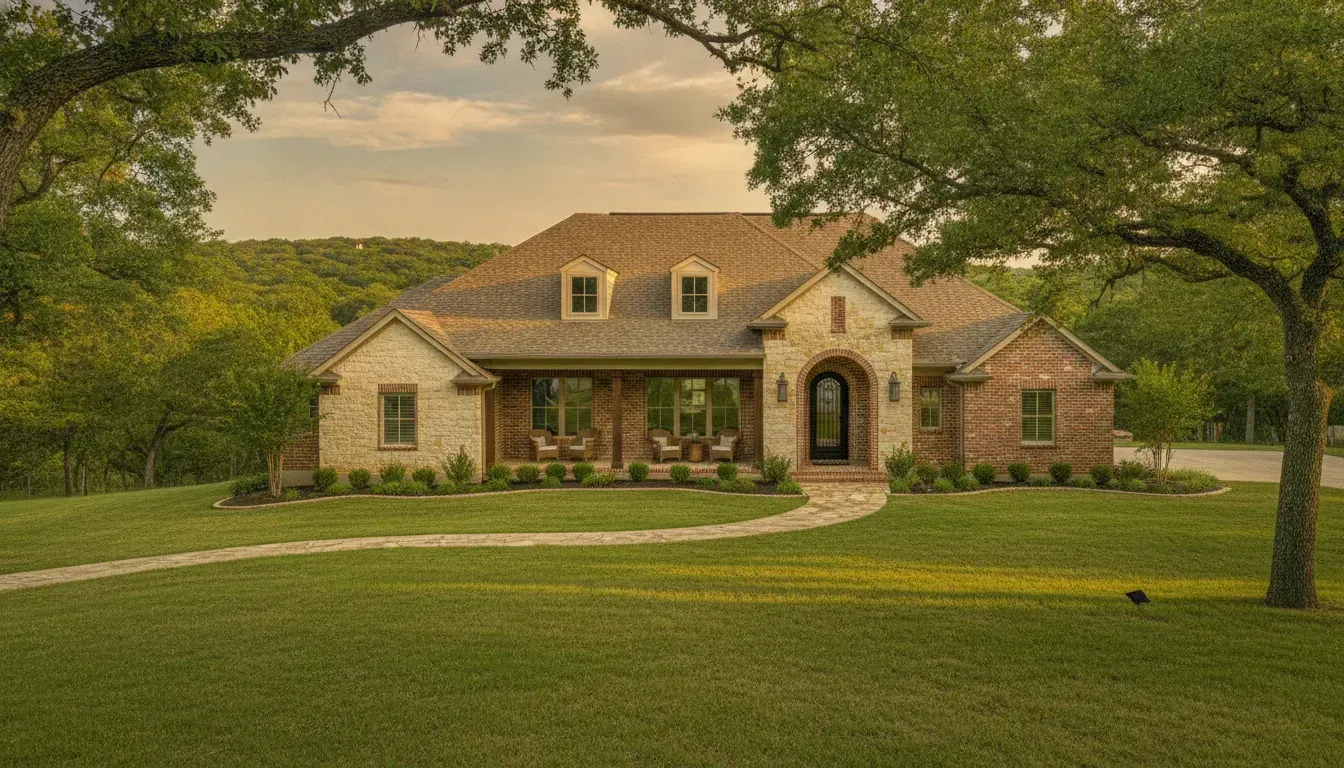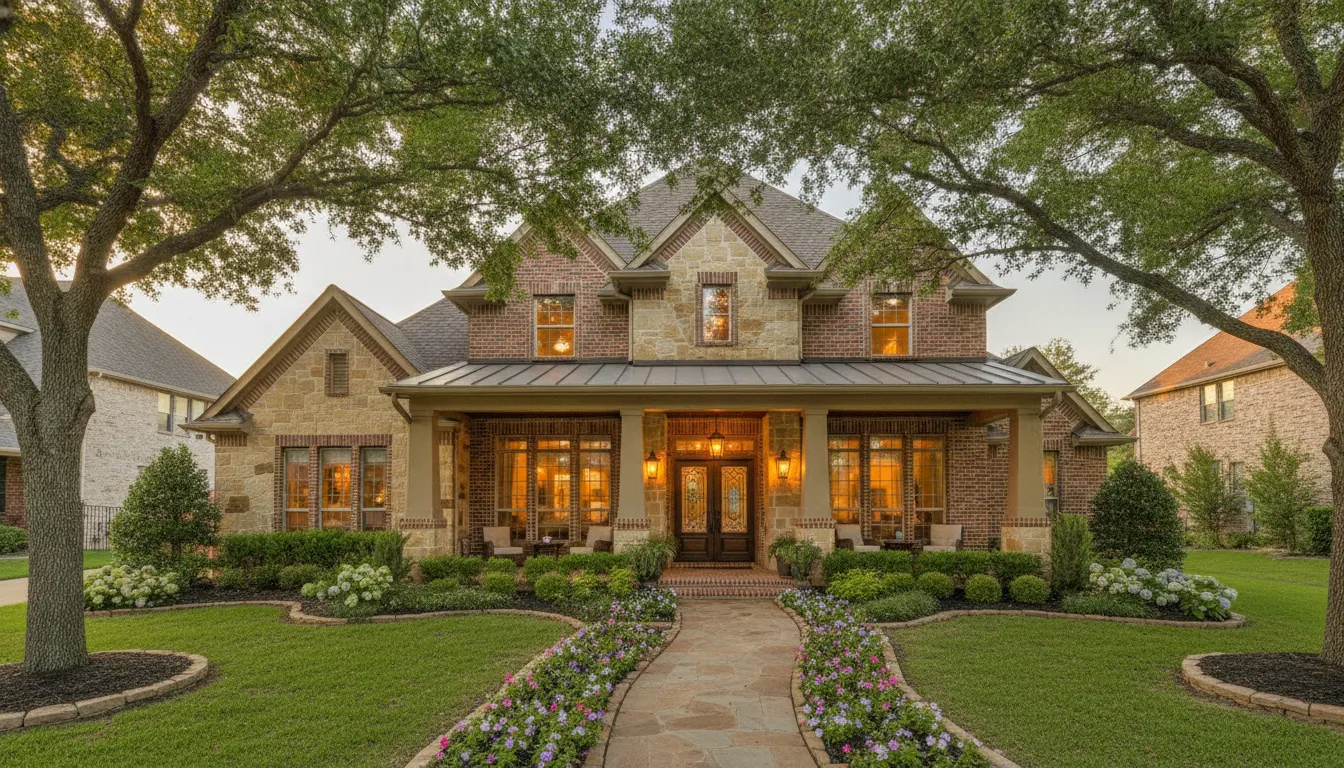

Floodplain Custom Home Lot in Texas: Buyer Guide
Can you build on a floodplain lot in Texas? Learn the map, permit, elevation, septic, design, insurance, and cost checks before buying or building.

Can you build a custom home on a floodplain lot in Texas? Sometimes, but a floodplain designation is not a simple yes-or-no answer. The result depends on the FEMA zone, whether the homesite is in a regulatory floodway, the base flood elevation, local floodplain rules, drainage and soil conditions, utilities, septic feasibility, insurance, and the final house design.
Ready to get started? Call ROSÖ Homes today at 972-945-7676 or contact ROSÖ Homes online.
What does floodplain mean for a Texas homesite?
A floodplain is land that may be affected by flooding. FEMA maps divide areas into zones based on flood risk and available study data. Some high-risk zones begin with A or V, while other areas carry moderate, low, or undetermined mapped risk. A zone label is an important starting point, not a complete site feasibility report.
Use the FEMA Flood Map Service Center to look up the parcel and download the effective map information. Confirm the exact parcel boundaries, map panel, community, and map date. If a buyer relies only on a real estate listing or an old map screenshot, they may miss a revised map, an adjacent floodway, or a homesite elevation issue.
Floodplain and floodway are not the same thing
The floodplain is the broader area that may carry or store floodwater. A regulatory floodway is the part of a watercourse and adjacent land reserved to convey the base flood without an unacceptable increase in flood levels. Development in a floodway usually receives closer engineering and permit review because a building, fill, driveway, wall, or other obstruction can affect how water moves.
Ask the local floodplain administrator whether the proposed building pad, driveway, septic field, retaining work, and other improvements fall inside the floodway. If they do, the review may require additional hydraulic or drainage analysis and a design that satisfies local rules. The answer is specific to the community and the proposed work.
What to check before buying a floodplain lot in Texas
Floodplain diligence should happen before you make the land nonrefundable. The following checks help turn a general concern into a property-specific feasibility decision.
How floodplain conditions can change a custom home design
When a lot is feasible, the floodplain often becomes a design and construction input from the beginning. The goal is not to force a standard plan onto the property. It is to place and design the home so the finished project meets the applicable rules and responds to the land.
Elevation and foundation
For many residential structures in mapped high-risk areas, floodplain management requirements focus on elevating the lowest floor to or above the required flood elevation. The permitted foundation approach may involve fill, a crawlspace, piers, columns, or another engineered solution, depending on the site and local ordinance. The right choice affects the entry sequence, stairs or ramps, mechanical equipment, garage location, structural detailing, and finished grading.
Do not treat an elevation certificate as a substitute for a feasibility study. FEMA explains that an Elevation Certificate documents building elevations for floodplain compliance and can support insurance rating. It does not by itself remove a federal flood insurance requirement, and only FEMA map-change processes such as a LOMA or LOMR-F can change a mapped designation for applicable circumstances.
Drainage, fill, and site access
Floodplain work is not limited to the house footprint. A driveway, bridge, culvert, retaining feature, pad, pool, septic area, or grading change can affect permitting and drainage. The site plan should show where water enters, crosses, and leaves the property. It should also show construction access and how the project will avoid creating a problem for neighboring land.
Utilities and mechanical equipment
Electrical equipment, HVAC components, water heaters, controls, and other systems may need to be elevated, protected, anchored, or located outside areas subject to flood exposure. The utility providers and local building officials determine the exact requirements. Resolve these details before pricing the project, because moving mechanical systems late can affect both design and budget.
Have questions about floodplain feasibility? ROSÖ Homes can help review the next steps, or call 972-945-7676 for expert guidance.
How much does a floodplain custom home lot cost to build on?
There is no reliable statewide floodplain surcharge. Costs depend on the site and the work required to make the project approvable. Common variable items include surveys, geotechnical and civil engineering, drainage improvements, foundation changes, elevated access, utility extensions, septic design, permitting, insurance, clearing, grading, and any mitigation or map-change process.
For context, ROSÖ Homes' current approved custom home construction rate is $175 per square foot of Total Area Under Roof (TAUR), with a 2,000-square-foot minimum and design services included. That rate describes the approved custom home construction program. It does not turn unknown floodplain, utility, land, or site-development costs into a fixed number. The project scope, lot conditions, and local requirements must be understood before a complete price can be established.
For a broader explanation of how land and site expenses fit into a DFW build-on-your-lot project, review ROSÖ Homes' build-on-your-lot program. You can also compare how a fixed-price custom home agreement differs from cost-plus construction. The useful question is not only what the house costs per square foot, but which site conditions are included, excluded, allowance-based, or still subject to verification.
Contact ROSÖ Homes at 972-945-7676 to discuss a floodplain lot, or fill out the online form for a consultation.
A practical go or no-go process for a Texas floodplain lot
A disciplined process can prevent a costly land decision. Use this sequence with the builder, surveyor, engineer, local authority, lender, and insurance professional:
Floodplain custom home lot Texas: frequently asked questions
Can I build a custom home in a Texas floodplain?
It may be possible, but the local jurisdiction must confirm the applicable requirements. The FEMA zone, floodway status, base flood elevation, building location, foundation design, drainage, utilities, and permits all matter. A builder should review the lot with the appropriate surveyor and engineering professionals before promising a build.
Is a floodplain lot automatically unbuildable?
No. A floodplain designation signals that additional due diligence and flood-resistant design may be needed. A parcel can still have a workable building area, while another lot with a similar map label may not be practical because of the floodway, elevation difference, access, septic constraints, or local rules.
What is the first step before buying the lot?
Check the current FEMA map, then contact the local floodplain administrator with the parcel information. Before closing, order or review a current survey and ask qualified professionals to evaluate elevation, drainage, soils, utilities, and septic or sewer options.
Will flood insurance be required?
It depends on the mapped risk, lender, community, and property-specific facts. A lender may have its own requirements, and an Elevation Certificate can provide information used for flood insurance rating. Discuss the requirement and expected premium with the lender and insurance professional before committing to the property.
Can ROSÖ Homes evaluate my floodplain lot?
ROSÖ Homes can discuss a DFW build-on-your-lot opportunity and help identify the questions that need to be answered before design and pricing. Bring the parcel address, survey, map information, utility details, restrictions, and any prior engineering or septic documents to the conversation. Call 972-945-7676 or contact ROSÖ Homes online.
Final takeaway
A floodplain custom home lot in Texas should be treated as a feasibility project, not a standard build site. Verify the map, floodway, elevation, local permits, drainage, foundation, utilities, septic, insurance, and total site budget before you buy or design. When the lot has a workable path, a hands-on design-build team can help translate those constraints into a home plan and a clearer construction scope.
This article is general educational information, not legal, engineering, floodplain, insurance, lending, or permitting advice. Requirements vary by community and parcel. Confirm current rules with the local authority and qualified licensed professionals.
Sources for further reading